Etiquetas

Mostrando entradas con la etiqueta obra: EL REÑIDERO. Mostrar todas las entradas

Renidero by Carlos Gimenez / Festival Latino Puts an Accent On Global Themes / By Nan Robertson, July 31, 1987, The New York Times


"The director is Carlos Gimenez, celebrated for 
his richly visual staging"


IT'S not Christmas yet, but a pinata filled with rich artistic gifts is about to burst on this city. The 11th Festival Latino in New York - the biggest Latin American cultural event in the United States and one of the most important showcases anywhere for Latin talent - begins tomorrow. Fifty thousand people attended the festival's events last year, and at least as many are expected this time.


It will run through Aug. 23, and will feature the best of Latin American, Spanish and Hispanic-American theater, films and music at the Public Theater on Lafayette Street, the open-air Delacorte Theater in Central Park and the Metro Cinema on upper Broadway. Joseph Papp of the New York Shakespeare Festival is producing the festival.
''This is not an ethnic festival,'' said the co-director, Cecilia Vega, in her office at the Public. ''This is an inter-theatrical event whose messages cross all borders.'' Mr. Papp described Ms. Vega, born in El Salvador, as the person ''who keeps the thing together.'' He called her ''the clear-headed and practical one'' who arranges visas, air tickets, hotel space and all other logistical matters for the several hundred Latin performers, crew, directors and producers coming here. Mr. Papp described her co-director and husband, Oscar Ciccone, as the ''dreamer'' who makes the esthetic decisions.
All seven stage presentations, most with simultaneous interpretations in English through headphones, will be at the Public. So will the Tribute to Argentine Cinema, with 21 feature-length movies spanning four decades of one of South America's most influential film centers. There will be a free concert at the Delacorte and a movie festival at the Metro with works from nine Latin American countries, all subtitled in English. Fifty hours of Spanish- and Portuguese-language television programs will be shown over Manhattan and Paragon Cable's Channel L. 
Leading off the Festival Latino this weekend is a modern classic of Latin American drama, Sergio De Cecco's ''Renidero'' (''Cockpit''), performed by La Comedia Cordobesa, which includes some of Argentina's most noted performers. The director is Carlos Gimenez, celebrated for his richly visual staging. Based on Sophocles' ''Electra,'' it was first performed in the early 1960's. It is a tale of uprooted, dueling gauchos threatened by industrialization, and is set in a turn-of-the-century slum in Buenos Aires. (In Spanish, tomorrow through Thursday at 8 P.M.; simultaneous English interpretation available at some performances.) 

'Political Farce' With Music Among the theatrical stars participating are Fernando Allende, Mexican heartthrob of movies, television and records, in his New York stage debut, and Norma Aleandro of Argentina, the heroine of ''The Official Story,'' which won the 1986 Academy Award for best foreign film. Mr. Allende, a Los Angeles resident who has appeared on the ''Miami Vice'' television series, will be the lead of Carlos Morton's comedy ''Pancho Diablo.'' He said it tells the story of how the Devil, fed up with an eternal bum rap in Hell, reappears as an undertaker on the border between the United States and Mexico. It was written, and will be performed entirely, in English. Mr. Morton, born in Chicago and now living in Laredo, Tex., ''five minutes from the Rio Grande,'' is a Chicano - a North American of Mexican descent. Mr. Allende sees ''Pancho Diablo'' as a ''political farce'' with music. He said, ''Everybody had to cross a big river to get to this country.'' He said the play describes the search, despite hunger and war, ''for that divine heart in all of us.'' Performances will be at 8 P.M. Wednesday through Aug. 9.
Ms. Aleandro, who scored in a one-woman show at the Festival Latino in 1986, will play the title role in ''The Senorita From Tacna,'' by Mario Vargas Llosa. She will appear with her nine-member company. She portrays Elvira, a spinster in her 90's, whose fantasies about herself and her family's past become the obsession of her grandnephew Belisario. Ms. Aleandro's acting last year in her one-woman program was so visually eloquent that one critic removed his English-spouting headset halfway through the show. ''Language,'' he wrote, ''almost did not matter.''
The play will be performed in Spanish, at the Public from Aug. 14 through Aug. 23 at 8 P.M. Simultaneous English interpretations will be available at the performances of Aug. 14-16. Classic Theater, Modern Film
The festival's other theatrical productions are Spain's Cuadra de Sevilla performing an adaptation of Euripedes' ''Bacchae,'' with Manuela Vargas, actress and dancer; Venezuela's Rajatabla Company in ''The Tragicomedy of Calisto and Malibea''; Chile's Taller Theater Two workshop in ''The Clowns of Hope,'' and Puerto Rico's female musical group Las Bohemias in ''Concerto in Hi-Fi,'' a re-creation of Las Damiselas, a true-life female band of the 1940's, with songs by Sylvia Rexach, one of Latin America's most beloved composers.
The new movies at the Metro Cinema include the winner of the best-film prize of the 1987 Latin American Film Awards: ''A Successful Man'' by Humberto Solas, a Cuban director. It will be shown Aug. 7 and 8 at 7:45 P.M. and Aug. 14 at 10 P.M.
The fourth annual free Concert for Peace and Friendship will be held at 8 P.M. Aug. 10 at the Delacorte, and will feature two stars of Latin America's ''New Song'' movement: Lucecita Benitez of Puerto Rico and Pablo Milanes of Cuba. Tickets are available only on the day of the concert.
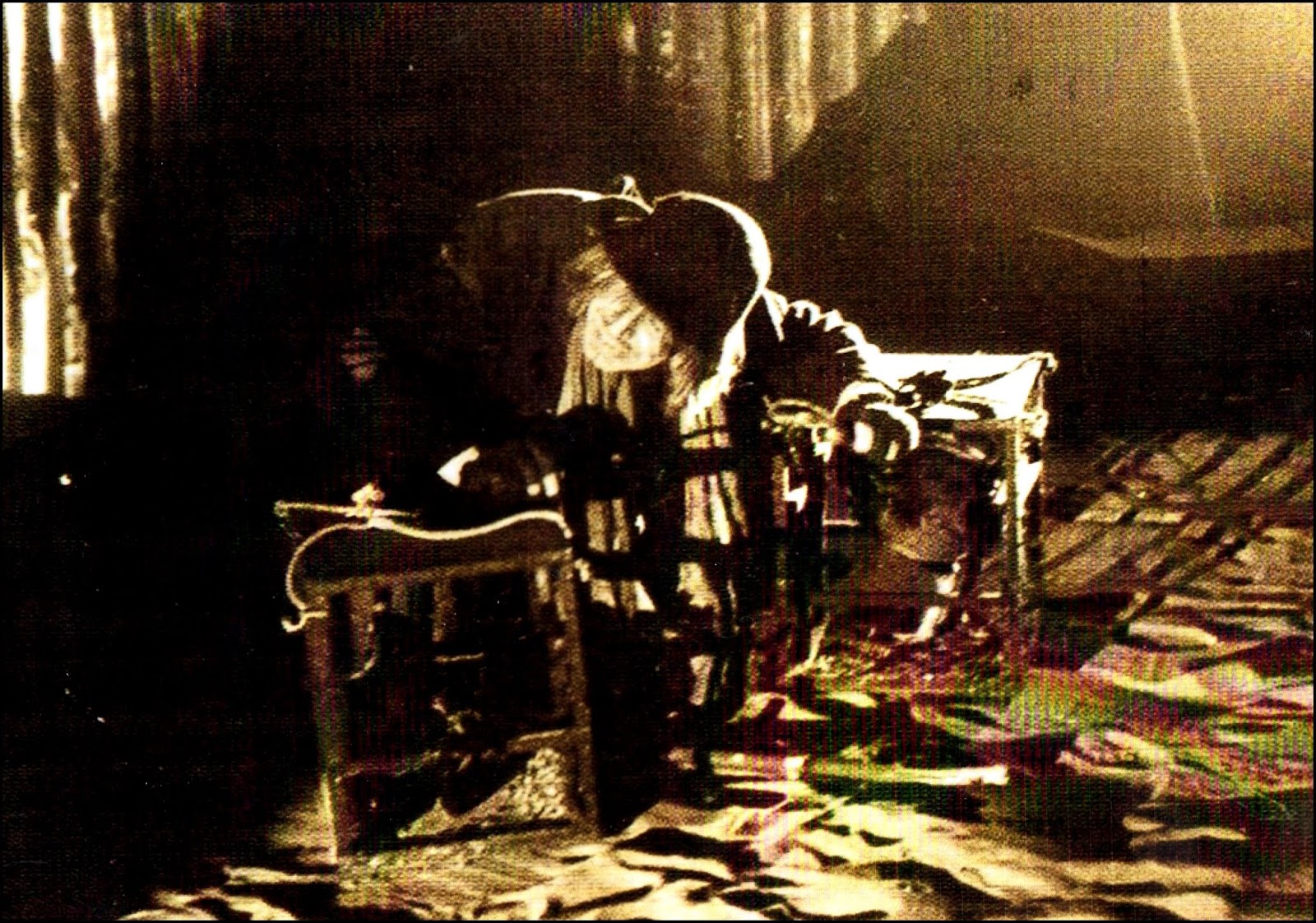
Photo of Aristides Manira in ''El Renidero,'' which opens the three-week Festival Latino tomorrow night. (Oscar Gonzalez Aguirre); Photo shows, left to right, Ivonne Coll, Fernando Allende and Sully Diaz perform in Carlos Morton's play ''Pancho Diablo,'' beginning Aug. 5 at the Public. (Martha Swope Associates/Carol Rosegg) (Pg. C23).

By Nan Robertson
July 31, 1987


EL REÑIDERO, ELECTRA DE ARGENTINA, crítica de D. J. R. Bruckner, 4 de agosto de 1987, The New York Times


“Y la dirección de Carlos Giménez hace que la complicada trama sea admirablemente clara
a medida que la historia se mueve dentro y fuera de los recuerdos de los diferentes personajes.”


ELECTRA puede haber seducido a más escritores que cualquier otra heroína literaria. La figura de la mitología griega que pone a prueba el destino de los seres humanos aplastados entre el deber inexorable y la ley inamovible ha aparecido en historias, poemas y obras de teatro en muchas formas en todas las lenguas europeas repetidamente durante más de dos milenios.

En "El Reñidero" del dramaturgo argentino Sergio De Cecco, ella es Elena, la hija de un insignificante matón político en un barrio pobre de Buenos Aires a principios de siglo. Su padre, Pancho Morales, ha sido asesinado en un duelo por su amigo Santiago Soriano, quien es el amante de su madre. Elena está convencida de que Soriano simplemente lo asesinó y decide inspirar a su hermano, Orestes, a vengarse.

Pero De Cecco está explorando el destino en un mundo político lejos de la antigua Grecia, un barrio donde los gauchos desplazados del campo en un país industrializado son víctimas de políticos despiadados y de su propia ética rígida y machista. En la actuación oscuramente espectacular que ofrece la obra de La Comedia Cordobesa, una compañía de la provincia argentina de Córdoba, como parte del Festival Latino en el Teatro Público, la sangrienta realidad de ese mundo retuerce la vieja historia en formas fascinantes. De hecho, en general, la actuación supera a la obra.

Contra decorados blancos, grises y negros magníficamente iluminados que mezclan madera, metal, espejos y arena en una serie de imágenes impresionistas abstractas, los personajes se mueven como figuras en una danza. Su discurso (la actuación es en español con traducción simultánea proporcionada a través de auriculares infrarrojos), la música de guitarra y bandoneón, las canciones elevadas de una rica soprano cuyas letras contraponen el diálogo, todos atraen al espectador tan profundamente en este barrio que comparte la creencia de los personajes de que es el único mundo, ineludible e inmutable.

Y la dirección de Carlos Giménez hace que la complicada trama sea admirablemente clara a medida que la historia entra y sale de los recuerdos de diferentes personajes. La prueba de su éxito es que cuando Pancho, que ha sido solo un recuerdo en todo momento, se convierte en el catalizador irresistible de la tragedia final, triunfa sobre la cordura y la esperanza porque es más real que cualquiera de los vivos. Para la audiencia, el viaje de la realidad sofocante a la ilusión asesina ha sido directo y rápido.

Los dones poéticos del Sr. De Cecco a veces lo traicionan; él arroja una luz mítica sobre cada incidente, a pesar de que algunos de sus incidentes no pueden soportar tal iluminación. Madre e hijo, y padre e hija, llegan a conocerse a sí mismos y entre sí de maneras escalofriantes y alarmantes que serían verdaderamente trágicas, excepto que con demasiada frecuencia su conocimiento tiene poco efecto en sus acciones. Y sus coqueteos con el melodrama a veces son demasiado tentadores para que los actores se resistan. En esta actuación hay momentos de grandeza y grandilocuencia que piden un poco de risa, que es todo lo que se necesitaría para destruir esta obra.


EL REÑIDERO, de Sergio De Cecco; dirigida por Carlos Giménez; asistente dirección: Roberto Stoppello; traducción:  Jack Agüeros; iluminación: Francisco Sarmiento; decorados y vestuario: Rafael Reyeros; música: Daniel López. 


Presentado por Joseph Papp. En The Public/LuEsther.


Beatriz Angelotti, Alvin Astorga, Adelina Costantini Arístides Manira, Enrique Introini, Azucena Carmona, Ángel Fernández Mateu, Jorge Arán, Osvaldo Hueghes, Edith Rivero, Elena Dura, Liliana Rodríguez.


Fuente y traducción: The New York Times


STAGE: 'EL RENIDERO,' ELECTRA FROM ARGENTINA / By D. J. R. Bruckner, August 4, 1987, The New York Times


And Carlos Gimenez's direction makes the complicated plot admirably clear as the story moves in and out of remembrances of different characters


ELECTRA may have seduced more writers than any other literary heroine. The figure in Greek mythology who tests the fate of human beings crushed between inexorable duty and immovable law has turned up in stories, poems and plays in many guises in every European language repeatedly for more than two millennia.
In ''El Renidero'' (''The Cockpit'') by the Argentine playwright Sergio De Cecco, she is Elena, the daughter of a puny political hoodlum in a Buenos Aires slum at the turn of the century. Her father, Pancho Morales, has been killed in a duel by his friend Santiago Soriano, who is her mother's lover. Elena is convinced Soriano simply murdered him and determines to inspire her brother, Orestes, to take vengeance.
But Mr. De Cecco is exploring fate in a political world far from ancient Greece - a barrio where gauchos displaced from the countryside in an industrialized country are victims of ruthless politicians and their own rigid, macho ethic. In the darkly spectacular performance given the play by La Comedia Cordobesa, a company from the Argentine province of Cordoba, as part of Festival Latino at the Public Theater, the bloody reality of that world twists the old story into fascinating shapes. Indeed, on the whole, the performance outstrips the play.
Against superbly lighted white, gray and black sets that mix wood, metal, mirrors and sand into a series of abstract impressionist pictures, the characters move like figures in a dance. Their speech (the performance is in Spanish with simultaneous translation provided through infrared earphones), the music of guitar and bandoleon, the soaring songs of a rich soprano whose lyrics counterpoint the dialogue - all draw the viewer so deeply into this barrio that he shares the characters' belief that it is the only world, inescapable and unchangeable.
And Carlos Gimenez's direction makes the complicated plot admirably clear as the story moves in and out of remembrances of different characters. The test of his success is that when Pancho, who has been only a memory throughout, becomes the irresistible catalyst of the final tragedy, he triumphs over sanity and hope because he is more real than any of the living. For the audience, the trip from stifling reality to murderous illusion has been straight and swift.
Mr. De Cecco's poetic gifts sometimes betray him; he casts a mythic light on every incident, even though some of his incidents cannot stand such illumination. Mother and son, and father and daughter, come to know themselves and one another in chilling, alarming ways that would be truly tragic except that too often their knowledge has little effect on their actions. And his flirtations with melodrama are sometimes too tempting for the actors to resist. In this performance there are moments of grandeur, and grandiloquence, that beg for a little laugh - which is all it would take to destroy this play. 
DUTY AND LAW EL RENIDERO, by Sergio De Cecco; directed by Carlos Gimenez; assistant director, Roberto Stopello; translation by Jack Agueros; lighting by Francisco Sarmiento; sets and costumes by Rafael Reyeros; music by Daniel Lopez. Presented by Joseph Papp. At the Public/LuEsther. Elena Morales ... Beatriz Angelotti Orestes Morales ... Alvin Astorga Nelida Morales ... Adelina Constantini Pancho Morales ... Aristides Manira Santiago Soriano ... Enrique Introini Lala ... Azucena Carmona Trapero ... Angel Fernandez Mateu Delegado ... Jorge Aran Vicente ... Osvaldo Hueghes Teresa ... Edith Rivero Vieja ... Elena Dura Voz ... Liliana Rodriguez
Photo of Beatriz Angelotti in ''El Renidero'' (''The Cockpit'') (Miguel Rajmil).


By D. J. R. Bruckner

August 4, 1987

The New York Times


Souce: 

The New York Times


Festival Latino Is Shifting Emphasis, By Jeremy Gerard / The New York Times, July 8, 1987


The 11th Festival Latino in New York, featuring seven theatrical productions, a film festival and a free concert, will run from Aug. 1 through 23 at the Public Theater in Greenwich Village, the Delacorte Theater in Central Park and at the Metro Cinema on upper Broadway. The festival, which will include presentations from the United States, Latin America and Spain, has been produced by Joseph Papp and the New York Shakespeare Festival since 1984.

The festival will open with an English-language production of ''Pancho Diablo,'' written by Carlos Morton and directed by Vicente Castro. The show will mark the New York stage debut of Fernando Allende, a Mexican actor who has appeared on the ''Miami Vice'' and ''Flamingo Road'' television series. The playwright was the winner of the 1986 New York Shakespeare Festival National Contest for Latino Plays. ''We wanted to present the best Latin talent in the United States,'' Cecilia Vega, a co-director with Oscar Ciccone, of the festival, said yesterday, in announcing the program. ''Pancho Diablo'' will run through Aug. 7 at the Public, as will all the theatrical productions.
The Argentine actress Norma Aleandro, who appeared in a solo show at last year's festival, will return in the title role of Mario Vargas Llosa's ''Senorita of Tacna.'' It will run Aug. 14 through 23.

In contrast with last year's festival, which included 34 productions given brief runs, this year's will provide greater exposure for fewer plays. Ms. Vega said that an emphasis had been placed, in choosing the participants, on the established reputations of the companies and their directors. Most of the productions in the festival will offer simultaneous translations.

The other theater productions include ''Las Bacantes,'' presented by La Cuadra de Sevilla, a Spanish company under the direction of Salvador Tavora, from Aug. 1 through 9; ''The Tragi-Comedy of Calixto and Malibea,'' a production of Venezuela's Rajatabla Company, directed by Carlos Gimenez, from Aug. 10 through 17; ''The Cockpit,'' presented by the Argentine company, La Comedia Cordobesa, from Aug. 1 through 6; ''The Clowns of Hope,'' staged by Claudio di Girolamo and produced by the Taller Teatro Dos, of Chile, from Aug. 19 through 23, and Las Bohemias, a female musical group from Puerto Rico, in ''Concerto in Hi-Fi,'' from Aug. 20 through 23. 

Singers from Cuba and Puerto Rico will highlight a free Concert for Peace and Friendship, at the Delacorte Theater on Aug. 10 at 8 P.M. The film program will include a tribute to Argentine films at the Public, and a Latin American film festival at the Metro Cinema, on Broadway at 99th Street. All feature films have English subtitles.
Tickets for the theater events at Festival Latino go on sale July 9 and are $15. All of the films are $5. For general information on the festival, call 598-7155 after July 9.


Transcripción y Fuente: Gabriel Flores


EL REÑIDERO, de Sergio De Cecco. Producción General y Dirección General: Carlos Giménez, Córdoba, Argentina 1987


Fuente: Ángel Fernández Mateu

Fuente: Alvin Astorga


Gira Festival Latino de Nueva York, donde tuvo un impresionante éxito reseñado por The New York Times,  y Festival Latino de México, invitaciones conseguidas por Carlos Giménez.


Carlos Giménez y elenco. Fuente: Alvin Astorga


 Fuente: Alvin Astorga

 Fuente: Alvin Astorga

Ángel Fernández Mateu. Fuente: AFM

Carlos Giménez y elenco. Fuente: Alvin Astorga


 Fuente: Alvin Astorga

 Fuente: Alvin Astorga

 Fuente: Alvin Astorga

 Fuente: Alvin Astorga

 Fuente: Alvin Astorga

 Fuente: Alvin Astorga

 Fuente: Alvin Astorga


Carlos Giménez y elenco. Fuente: Alvin Astorga

Fuente: Ángel Fernández Mateu

Fuente: Ángel Fernández Mateu

The New York Times, Aug 1987


The New York Times, Aug 4, 1987.


Fuentes
de Norma Estela Ferreyra
Viviana Marcela Iriart

Fuente fotos: Alvin Astorga / Ángel Fernández Mateu


Related Posts Plugin for WordPress, Blogger...